
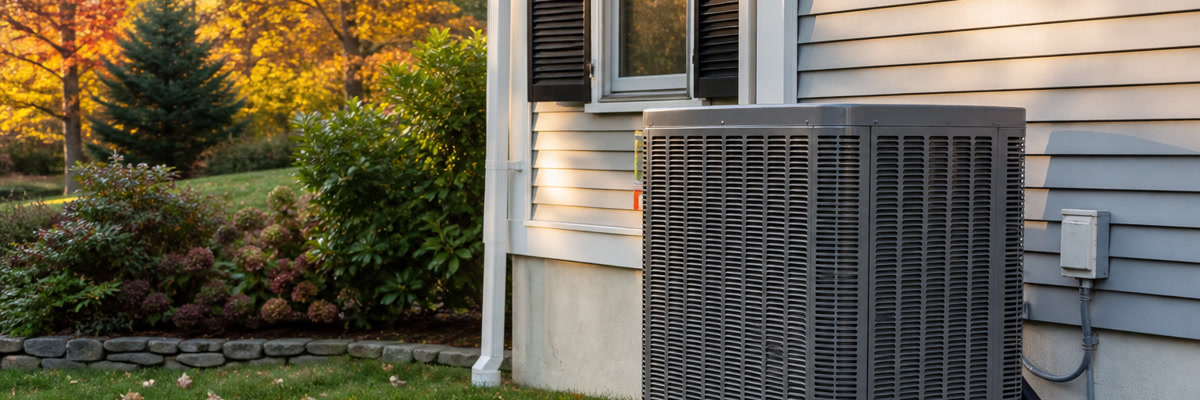
Fall heating startup in Greenwich, CT is the quiet window between the last warm afternoons and the first cold night. If the furnace or boiler has sat unused since spring, a short checkup now is usually easier than a no-heat call after the temperature drops.
Many Greenwich homes run two systems through the year: a boiler or furnace for heat, and a separate air conditioner or heat pump for cooling. The heating side can sit idle for months. Filters get dirty, condensate or low-water switches get sticky, and a small issue that would have been a simple service visit in September becomes an after-hours problem in October.
Why a fall startup matters in Greenwich homes
A lot of local houses have additions, finished basements, attic air handlers, and older ductwork or hydronic piping. Those layouts work well when everything is maintained. They are less forgiving when the first cold night hits and one zone will not heat, or the boiler short-cycles because a sensor or circulator never got a look after summer.
Coastal humidity also leaves its mark. Outdoor equipment, vents, and mechanical rooms collect dust and moisture over the summer. None of that means the system has failed. It does mean a startup visit is about confirming the heating side is ready, not waiting to find out at 9 p.m. on the first real cold snap.
Safe checks homeowners can make first
These are the simple things worth doing before you call. They will not replace a professional startup, and they should not include anything involving gas, oil, combustion, electrical panels, or refrigerant.
- Replace or clean the filter if the system uses one, and write down the size so the next change is easy.
- Set the thermostat to Heat and raise it a couple of degrees so you can hear the system start. If it does not start, turn it back and stop.
- Walk the house and confirm supply vents or radiators are open and not blocked by furniture or storage.
- Look at the outdoor unit or intake area and clear leaves, toys, and debris.
- For a boiler, look for obvious water on the floor or a pressure reading that is far from the usual mark. If you see a leak, shut the system down and call.
Do not open the burner, do not reset a locked-out boiler over and over, and do not ignore a carbon monoxide alarm. Those are service calls, not homeowner checks.
Warning signs that deserve professional attention
Call if the system will not start, if one floor stays cold, if you smell gas, if you hear banging or rapid short-cycling, or if you see water around the boiler or air handler. A burning smell on the very first startup can be dust on the heat exchanger and often clears. A sharp electrical smell, smoke, or a smell that does not fade should not be ignored.
Uneven rooms are common in older Greenwich houses, but a sudden change from last winter is worth a look. So is a system that runs constantly and never reaches the setpoint. That is the same pattern we see on the cooling side in summer, and it is usually telling you something about airflow, controls, or a component that is working too hard.
What a heating startup visit usually includes
A proper visit is more than turning the thermostat up and waiting. The technician should confirm safe ignition or burner operation, check filters and airflow or water circulation, look at safety switches, and test the system under a real heat call. On a boiler that can include pressure, circulators, and zone valves. On a furnace or air handler it includes the blower, filter, and the connections that sat unused all summer.
The point is to find the small problems while they are still small. A dirty flame sensor, a stuck condensate switch, or a circulator that needs attention is a lot easier to handle on a weekday in September than during the first cold snap, when every shop in town is taking no-heat calls.
How a Preventative Maintenance Agreement can help
A Preventative Maintenance Agreement, or PMA, is how we keep this from becoming a once-a-year scramble. Heating and cooling both get a scheduled visit, so the fall startup is already on the calendar instead of something you have to remember the week the weather turns. It also gives us a history on your equipment, which makes the next repair-or-maintain conversation more honest.
A PMA is not a pitch to replace a system that is still serviceable. It is a way to keep a working system working, and to catch the jobs where a repair is still the practical answer.
Useful homeowner resources
The U.S. Department of Energy’s Energy Saver pages are a good plain-language overview of how heating systems use energy, and the EPA has clear guidance on indoor air when you close the house up for winter. If you are hiring anyone for heating work in Connecticut, verify the contractor on the state’s eLicense lookup rather than taking “licensed and insured” at face value.
Need a fall heating checkup in Greenwich?
If you want the heating side looked at before the first cold night, Call or Text Greenwich HVAC at 203-531-7511 or reach us through our contact page. We help Greenwich homeowners with practical maintenance, repair, replacement, and troubleshooting guidance. We are a licensed Connecticut HVAC contractor (HTG.0409031-S1) serving Greenwich and the surrounding neighborhoods.